

Description
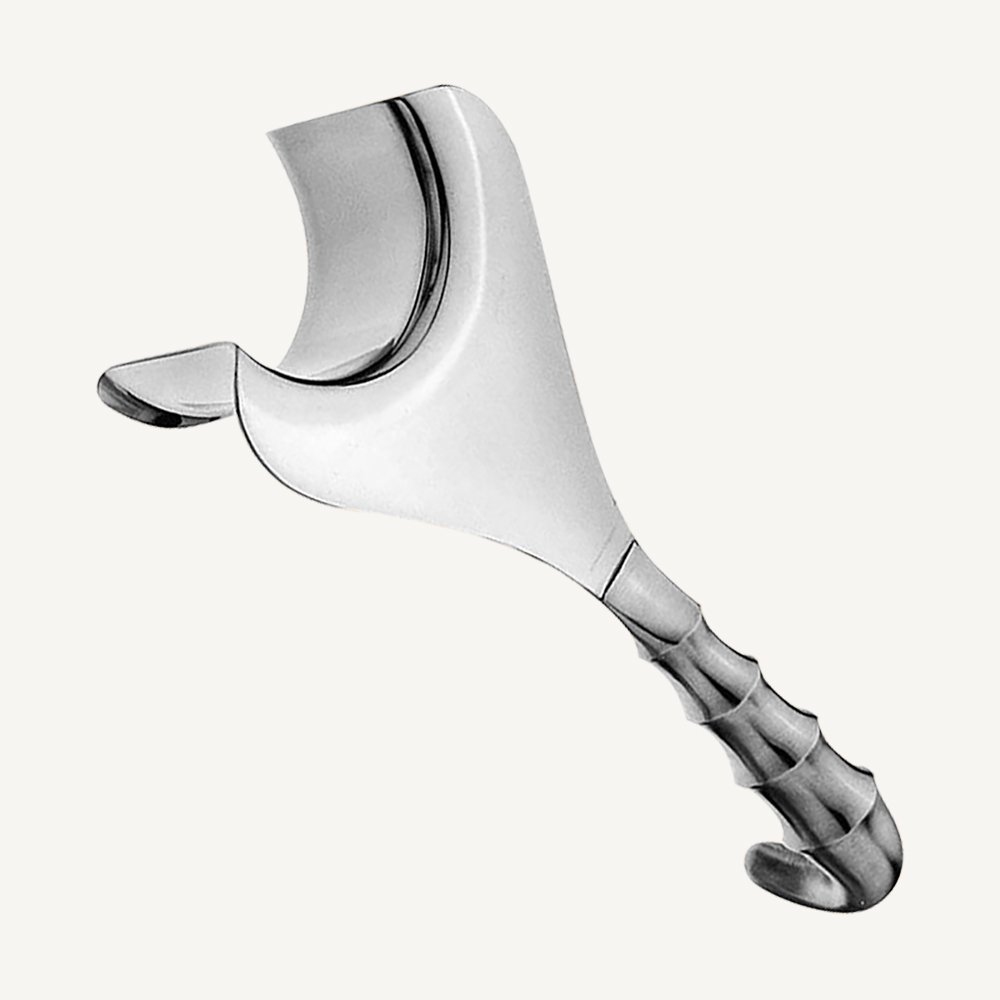
DeLee Universal Retractor Overview:
Engineered for deep pelvic and abdominal tissue management, the De Lee Universal Retractor (9 ½” / 241 mm) is a specialized surgical instrument designed to create an expansive, stable operative corridor during gynaecological and open surgical procedures. Featuring an extra-wide 2 ¾” x 2″ (70 mm x 51 mm) blade surface, it gently displaces surrounding soft-tissue layers with minimal trauma, ensuring unobstructed visualization of deeper anatomical structures. Forged from German medical-grade stainless steel, this robust retractor provides exceptional mechanical leverage and steady field exposure across demanding clinical interventions.
Key Features:
9 ½” (241 mm) Overall Length: Engineered with an extended handle profile to provide solid leverage and controlled maneuverability in deep or restricted operative cavities.
Broad 2 ¾” x 2″ (70 mm x 51 mm) Blade: Wide-surface blade ensures uniform tissue displacement while distributing contact pressure evenly across sensitive mucosal and visceral layers.
Rigid Structural Frame: High-tensile construction guarantees zero flexing, maintaining reliable field exposure throughout lengthy surgical procedures.
German Medical-Grade Steel: Forged from high-grade German stainless steel to ensure exceptional structural strength, rust resistance, and long-term durability.
Advanced Passivation Surface Treatment: Subjected to rigorous passivation processes to prevent oxidation, enhance chemical resistance, and eliminate surface impurities.
- Quality & Performance Tested: Every unit undergoes strict quality assurance protocols, including form testing, boiling tests, and functional performance evaluations.
Autoclavable & Reusable: Supplied non-sterile and engineered to withstand repeated high-temperature autoclave sterilization cycles without structural degradation.
Lifetime Warranty: Backed by a full lifetime guarantee covering defects in materials, manufacturing, and workmanship.
Applications & Uses:
Broad soft-tissue displacement and retraction during gynaecological, obstetric, and open abdominal procedures.
Establishing and maintaining clear sightlines to deeper pelvic sites and anatomical margins.
Preventing tissue encroachment to safeguard the surgical site during complex reconstructive or diagnostic interventions.





Reviews
There are no reviews yet.